DIY & professional application
DIY vs professional ceramic coating: which fits your car?
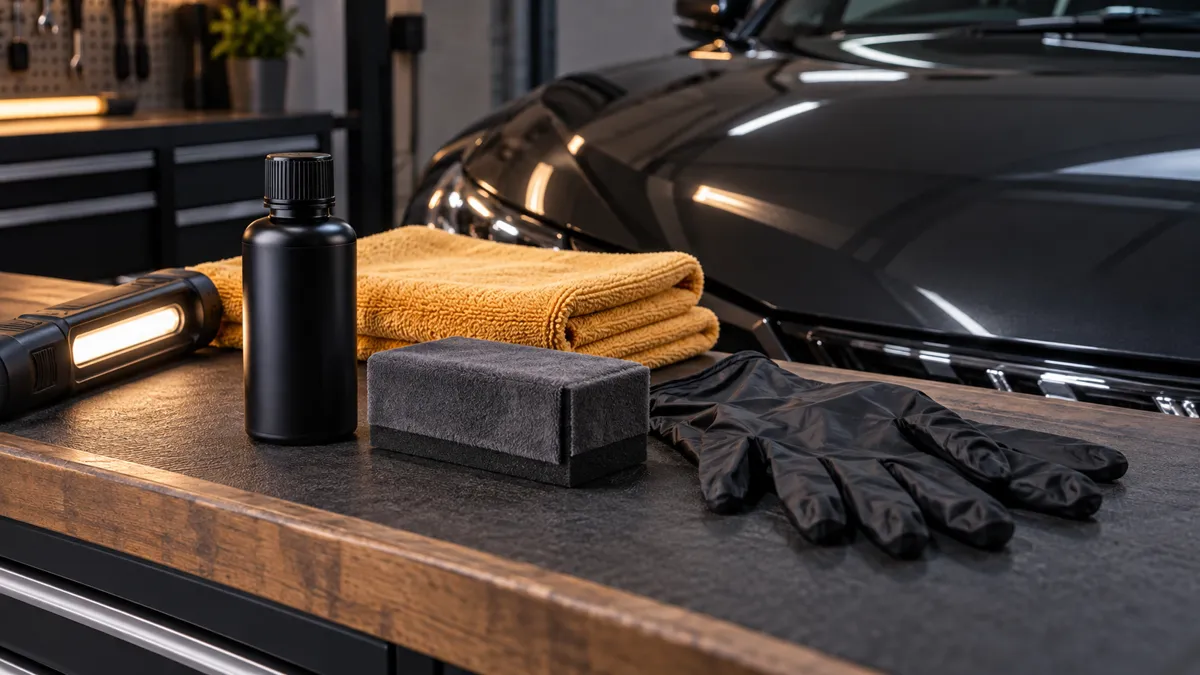
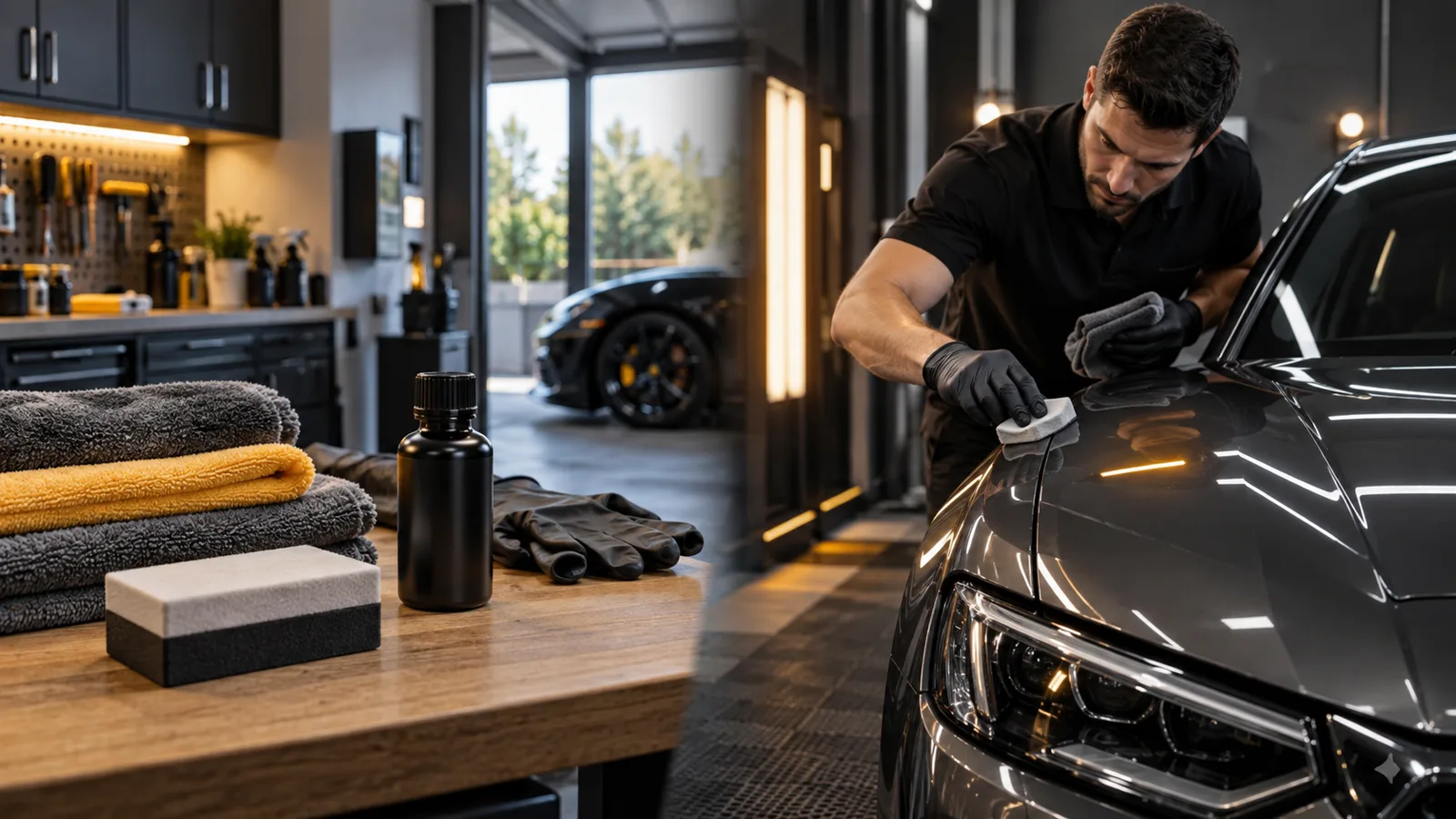
DIY ceramic coating can suit an owner with suitable working space, time and the ability to follow the complete preparation and application process. Professional installation can suit someone who needs paint assessment, correction or help managing the application. Compare the actual product and work included; consumer and professional coatings are not automatically identical.
Your working space
Check lighting, temperature and shelter against the product instructions.
Your preparation
Assess the finish and budget for the tools and correction it actually needs.
Your support
Compare your ability to resolve mistakes with an installer's written terms.
In this guide 5 sections
Swipe the table to compare the options →
| Decision | DIY application | Professional installation |
|---|---|---|
| Preparation | You inspect, clean and prepare the surface. | Agree on cleaning and correction in the quote. |
| Equipment | You provide tools, towels and suitable shelter. | Confirm the shop’s process and cure arrangements. |
| Application | You control section size, timing and leveling. | Ask who applies the named product. |
| Cost | Supplies, equipment and your time. | Quoted labor, product and included services. |
| Support | Product support and your ability to correct mistakes. | Written workmanship and product terms vary. |
Check your space and experience first
Read the coating instructions before buying. You need conditions that fit its temperature, moisture and cure requirements, along with lighting that reveals residue. A shaded driveway is not interchangeable with indoor shelter for every product.
For example, Crystal Serum Light instructions call for indoor application and keeping the vehicle indoors for 12 hours afterward. That is a requirement for that product, not a universal cure schedule.
Separate paint preparation from paint correction
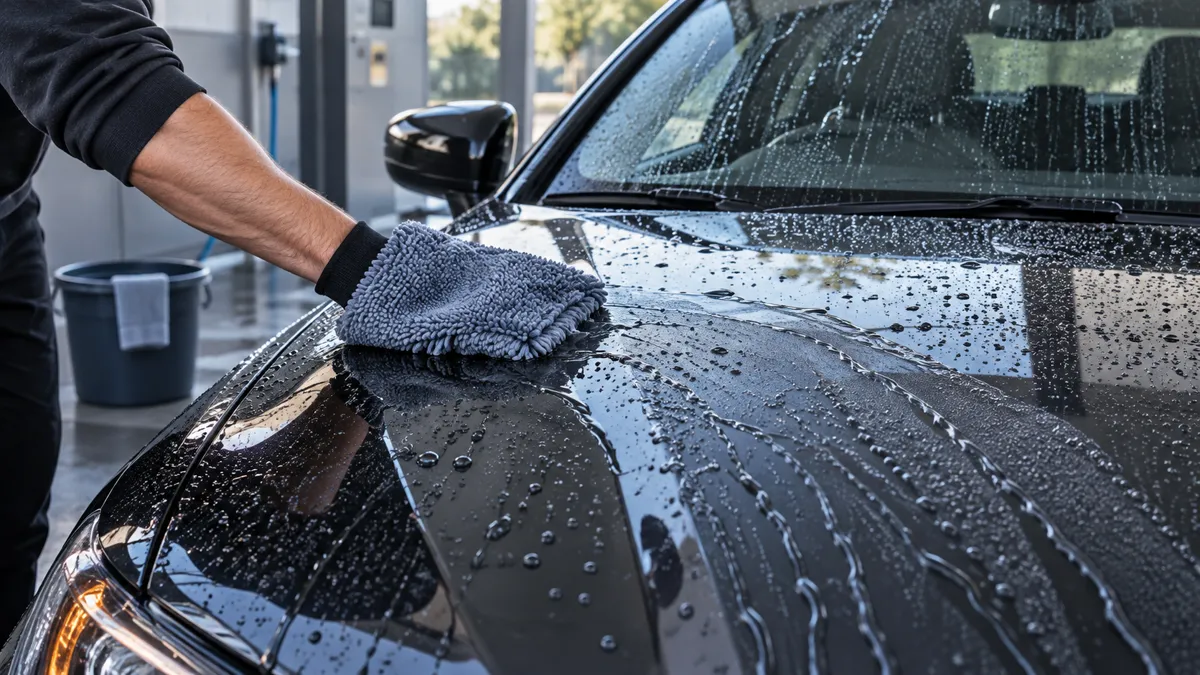
Every coating needs the surface prepared as directed. That can involve washing, removing relevant contamination and a compatible final wipe. Polishing is a separate decision based on condition and the finish you want.
New cars can have defects, but they do not automatically need aggressive correction. On older or repaired paint, an assessment can help avoid removing more clear coat than necessary. If machine polishing is unfamiliar, consider professional correction even if you intend to apply the coating yourself.
Plan the application before opening the bottle
Check instructions for surface preparation, applicators, section size, flash time and leveling. Work systematically and inspect under more than one lighting angle. Leaving excess product can create uneven residue that becomes harder to address once cured.
Allow for the entire job, including preparation, cleanup and the period when the vehicle must stay protected from moisture. Follow product-specific instructions if an application error occurs.
Compare the complete DIY and professional costs
List the coating, preparation products, applicators, towels and any missing equipment. Supplies you already own can change the economics considerably; the coating bottle alone is not a complete DIY budget.
Our catalog contains 2,201 advertised ceramic coating prices from 708 businesses. The median price-row midpoint is $950, and the middle half runs from $600 to $1,399.
Do not treat that professional reference figure as an exact savings calculation. Preparation, coverage, product and warranty support differ between jobs.
What to ask a professional installer
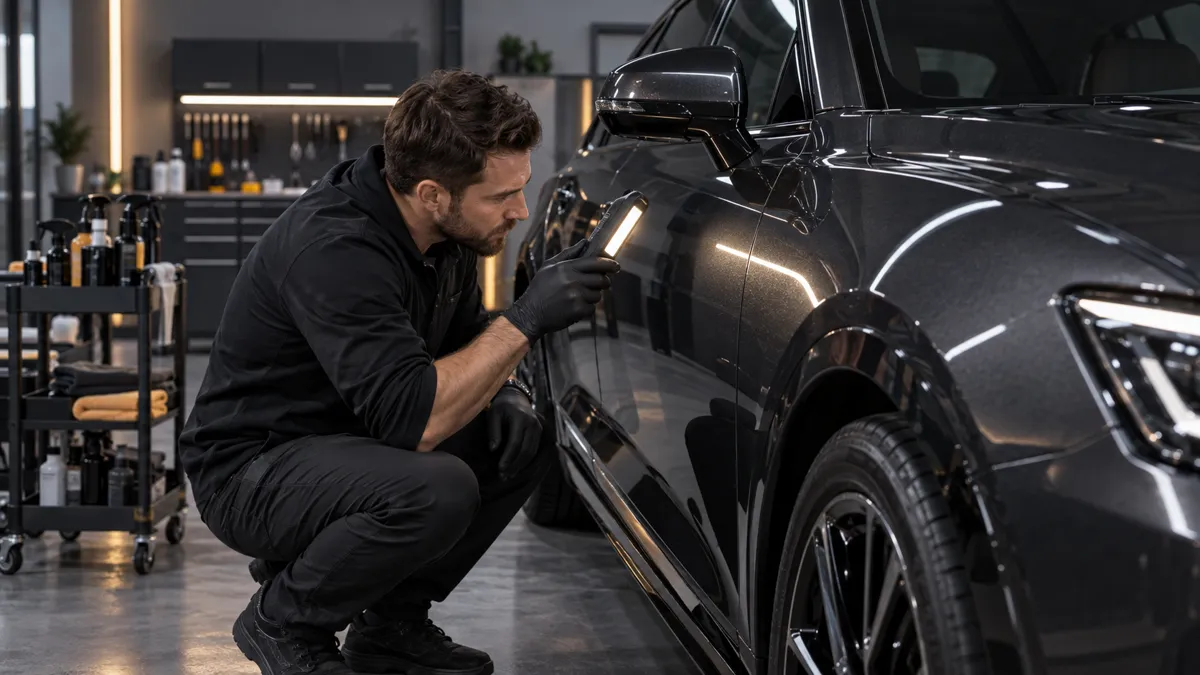
Ask for the coating name, preparation scope, expected finish, covered surfaces and cure arrangements in writing. Discuss visible defects before work starts and find out how the shop handles application problems.
Review evidence of completed work and the actual warranty terms. Product authorization, where required by the brand, does not replace evaluating the installer’s workmanship and communication.
Professional installation
Know what goes into your quote.
Compare local installers, then ask about the exact product, preparation and covered surfaces.
Sources and review notes
This guide uses manufacturer instructions and, where relevant, our catalog of advertised prices. Manufacturer durability claims are not our own test results. Follow the instructions for your exact product.
- CARPRO: coating instruction manualsProduct-specific preparation, application and curing instructions.
- Gtechniq: Crystal Serum LightProduct-specific application conditions and advertised durability.
- Ceramic coating cost and pricesAdvertised rates, sample sizes and breakdowns; not completed transactions or vehicle-specific quotes.