How-to guide car wash products
Are waterless washes safe for ceramic coatings?
Learn when a waterless wash is appropriate for coated paint and how it differs from rinseless washing. Compare Optimum No Rinse with Meguiar’s Waterless Wash & Wax.
As an Amazon Associate we earn from qualifying purchases. Amazon links open in a new tab.
Choose a product 2 options
Compare car wash products

Optimum
No Rinse Wash & Shine
32 fl oz · Version 6
Check Amazon for current price
ONR is the relevant comparison when you can mix a wash solution and use clean wash media but want to avoid a conventional final rinse.
Product details & buying advice
Optimum No Rinse Wash and Shine Version 6 - ONR Rinseless Car Wash Soap for Auto Detailing, Use On Paint, Ceramic Coatings, Glass, Interior (32 Oz)
ONR is the relevant comparison when you can mix a wash solution and use clean wash media but want to avoid a conventional final rinse. It is a rinseless process rather than simply wiping dry paint with a detailing spray.
Consider: Use the dilution and process for the actual formula you buy. Heavy or abrasive dirt may still need prerinsing; the name does not make every dirty vehicle suitable.
Product instructions from Optimum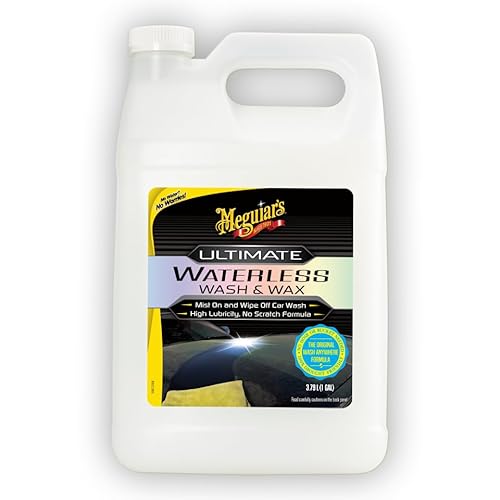
Meguiar's
Ultimate Waterless Wash & Wax
1 gallon refill · add a spray bottle
Check Amazon for current price
Meguiar’s Ultimate Waterless Wash & Wax fits a different situation: a product applied directly for a controlled wipe of light contamination.
Product details & buying advice
Meguiar's Ultimate Waterless Wash & Wax - Waterless Car Wash & Wax, 1 Gal
Meguiar’s Ultimate Waterless Wash & Wax fits a different situation: a product applied directly for a controlled wipe of light contamination. It can be useful where a full wash setup is unavailable and conditions are suitable.
Consider: It leaves a synthetic-wax protective layer. That can change the surface behavior of a coated car, and it is not suitable for treating heavy grit as a quick wipe-down job.
Product instructions from Meguiar'sPrices and availability may change. The price shown on Amazon at checkout applies.
Car wash products compared
| Product | Best fit | Size or specification | Amazon price |
|---|---|---|---|
| OptimumNo Rinse Wash & Shine | A rinseless wash with water | 32 fl oz · Version 6 | See product |
| Meguiar'sUltimate Waterless Wash & Wax | Light contamination without a bucket wash | 1 gallon refill · add a spray bottle | See product |
Swipe to compare specifications and prices →
Are waterless washes safe for ceramic coatings? A suitable product and careful technique can be appropriate for light contamination, but a ceramic coating does not make grit safe to wipe across paint. Rinseless and waterless washing are different processes, and heavy dirt calls for a proper rinse or conventional wash.
Product selection
Choosing car wash products
For routine cleaning without a final hose rinse, consider Optimum No Rinse as a rinseless wash mixed with water according to its label. For a lightly dusty surface, a compatible waterless product may fit. Meguiar’s Ultimate Waterless Wash & Wax leaves a protective wax layer, so consider whether that matches your coating’s maintenance plan.
Compare the products aboveBefore you buy and use these products
- Inspect the dirt before choosing a wipe-based method.
- Use the correct dilution and enough clean towels for the labeled process.
- Choose a suitable pre-rinse or conventional wash when heavy grit is present.
Waterless versus rinseless washing
A waterless wash is applied directly to the surface and removed with clean towels according to its instructions. A rinseless wash uses a measured amount of product mixed with water, clean wash media and a drying step without a conventional final rinse.
Optimum No Rinse belongs to the rinseless comparison here. Do not treat its name as permission to use an arbitrary spray dilution or substitute it into a different product’s process.
When to use a conventional wash instead
Visible grit, mud, heavy road film or salt deposits are reasons to avoid dragging a towel through the contamination. Arrange an appropriate rinse and wash rather than assuming the coating creates a scratch-proof barrier.
Even a light film needs enough compatible wash solution, clean media and careful handling. If you cannot keep enough clean towel faces available, postpone the cleanup rather than repeatedly wiping with a dirty section.
A careful low-water routine
Work on a cool surface out of direct sun. Follow the product’s concentration and application instructions. Clean a manageable area, change towel faces or wash media before they carry dirt onward, and dry as directed with a separate clean towel.
Keep wheel and lower-panel tools separate. Do not use heavy pressure to remove a stubborn deposit during a waterless pass; identify and treat that deposit with an appropriate process.
What a wash-and-wax product changes
A wash-and-wax product deliberately leaves material behind. That does not automatically mean it strips the ceramic coating, but it can change slickness and water behavior at the top surface. It can also make it harder to judge how the coating itself is performing.
If you want a maintenance routine without added protection, select a compatible product designed for that purpose and check the coating maker’s guidance. During the initial coating cure period, follow the installer or manufacturer’s wash restrictions.
Questions about car wash products
Is Optimum No Rinse a waterless wash?
ONR is discussed here as a rinseless wash mixed with water according to its instructions. Rinseless washing and a ready-to-use waterless spray are different processes.
Can a waterless wash scratch a ceramic coated car?
Yes. Abrasive dirt, dirty towels or excessive pressure can mar coated paint. A ceramic coating does not eliminate those risks. Use a suitable rinse and wash for heavy contamination.