Are Waterless Washes Safe for Ceramic Coatings? An Expert Analysis
The concept of a “waterless wash” is one of the most debated topics in detailing. It promises the ultimate convenience: the ability to clean your car anywhere, anytime, with just a spray bottle and a few microfiber towels. For owners of ceramic coated cars, however, this promise comes with a critical question: is it safe?
The fear is valid. Wiping dirt off a dry car sounds like a recipe for swirl marks and scratches. Can a chemical spray truly provide enough lubrication to be safe on a perfect, glossy finish?
To find the answer, we adopted the role of a journalist. We analyzed the consensus from professional detailers, synthesized real-world user experiences from community forums, and curated video analysis from trusted experts. The verdict is clear: a waterless wash is a highly specialized tool. When used correctly and in the right situation, it can be safe and effective. When used incorrectly, it can be disastrous.
The Science: How Does a Waterless Wash Actually Work?
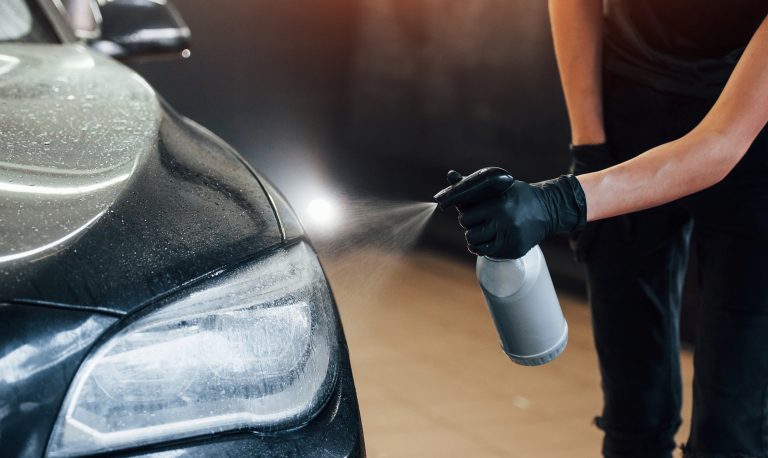
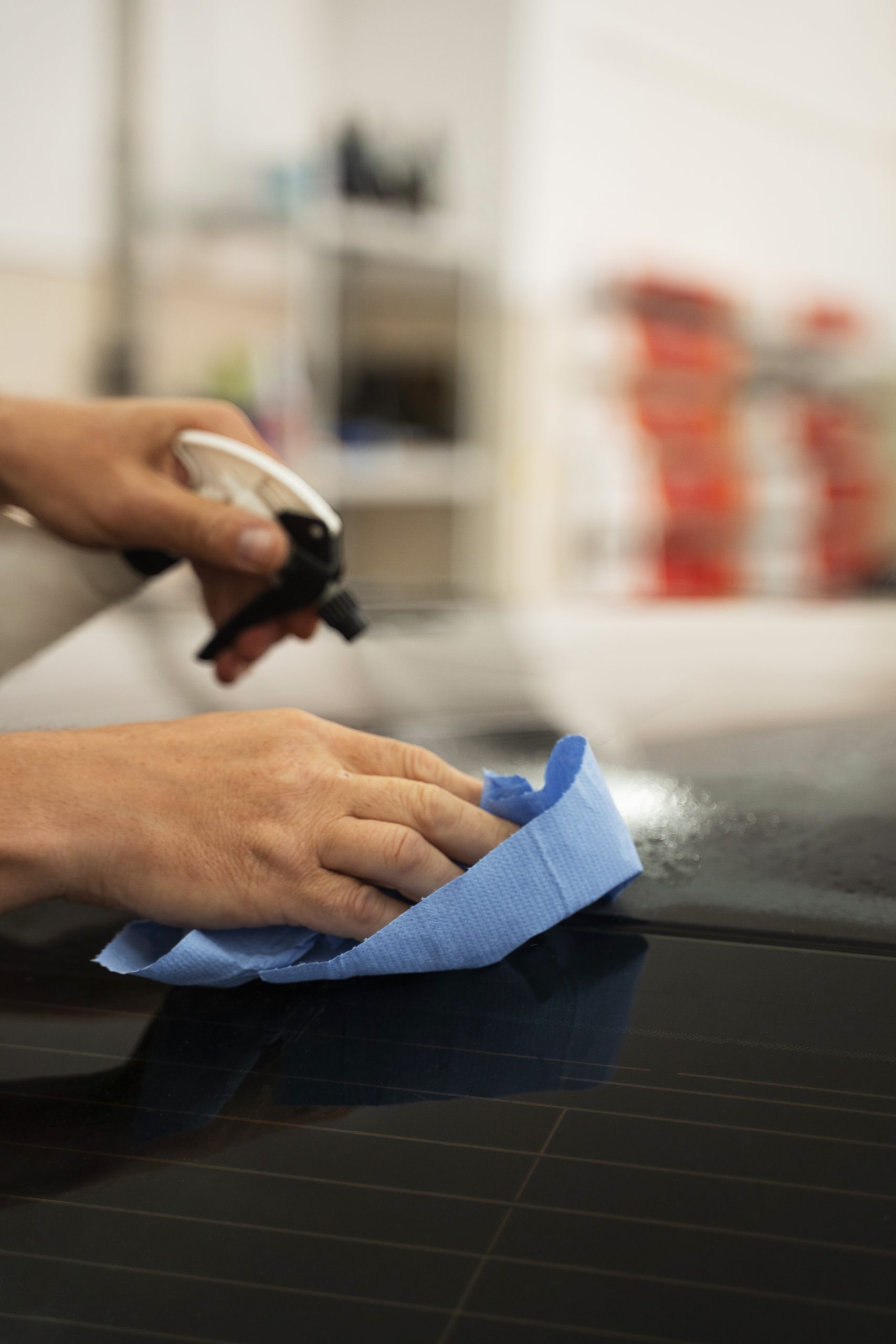
A waterless wash is a high-lubricity spray that contains a blend of specialized polymers and surfactants. The science is based on a principle called encapsulation. When sprayed on a lightly soiled surface, the formula is designed to surround, lift, and encapsulate each particle of dust and dirt, creating a lubricating barrier between the dirt and your paint. This allows the grime to be gently wiped away with a soft microfiber towel without scratching the surface.
Waterless vs. Rinseless Wash: These terms are often confused. A waterless wash is a ready-to-use spray for a nearly dry car with light dust. A rinseless wash (like Optimum No Rinse) is a concentrate you mix into a bucket of water. It’s used for a moderately dirty car and is considered a safer intermediate step between a waterless and a traditional wash.
The Professional Consensus: What the Experts Say
To understand the professional viewpoint, we analyzed tutorials from some of the most respected channels in the detailing industry. Pan The Organizer is known for his clear, technique-focused guides.
Analysis of Pan The Organizer’s “Ultimate Guide To Waterless Car Wash”
In his highly detailed tutorial, Pan emphasizes that technique is paramount for safety. His key takeaways align with the broader professional consensus:
-
Use on Light Dust Only: He explicitly states this method is for cars that are not heavily soiled.
-
Liberal Product Use: Do not be stingy with the spray. The surface must be saturated to ensure proper encapsulation.
-
High-Quality Towels are a Must: He recommends a stack of plush, clean microfiber towels.
-
The “One-Wipe” Rule: Wipe in a single direction, then flip to a new, clean side of the towel for the next wipe. Never scrub back and forth.
The secret to a safe waterless wash is the technique… you’re gently lifting the dirt, not rubbing it in. And you need a lot of towels!
The Community Verdict: What Real Users Say
On forums like /r/AutoDetailing and Autopia, the sentiment is consistent with the pro view. Experienced users see waterless washing as a specific tool for a specific job.
I tell my clients that a waterless wash is an emergency tool, not a replacement for a real wash. It’s for removing a single bird dropping or light dust before a car show. If the car is actually dirty—if it has mud, road film, or grit—you must use water. No chemical can safely remove heavy contamination without scratching.
The Golden Rule: When is it ACTUALLY Safe?
The safety of a waterless wash depends entirely on the condition of the car. Here is a clear guide:
- The car has a very light layer of dust from sitting in a garage.
- You need to remove a fresh, isolated bird dropping or bug spot.
- You are at a car show and need a final, quick wipe-down.
- You are cleaning door jambs or under the hood.
- The car is visibly dirty with mud, salt, or road film.
- The surface is gritty or sandy to the touch.
- You have just driven in the rain.
- The paint is hot to the touch.
The Best Waterless & Rinseless Wash Products
Optimum No Rinse (ONR)
Why It’s Our Top Pick:
ONR is a legendary product that created the rinseless wash category. Professionals and enthusiasts trust it implicitly because its advanced polymers create an exceptional lubricating barrier between dirt and paint. It’s incredibly versatile and can be diluted to different strengths to act as a rinseless wash, a waterless wash, a quick detailer, or a clay lubricant, making it a must-have in any detailing arsenal.
Meguiar’s Ultimate Waterless Wash & Wax
Why It’s Our Top Pick:
For a dedicated, ready-to-use waterless wash that you can grab off the shelf, the Meguiar’s Ultimate line is a top performer. It offers excellent lubricity and cleaning power for light dust and grime. It’s widely available and trusted by millions of users. The “wax” component leaves behind a bit of protection, though this can slightly mute the properties of a “pure” ceramic coating. For uncoated cars or as a convenient all-in-one, it’s fantastic.
The Final Verdict: A Tool, Not a Replacement
A waterless wash is a valuable tool in your detailing arsenal, but it is not a replacement for a traditional two-bucket wash. Its safety is 100% dependent on using it in the right situation—for light dust only—and with the proper, meticulous technique demonstrated by experts like Pan The Organizer.
For owners of ceramic coated cars, a high-quality product like Optimum No Rinse (used as a rinseless or waterless wash) is the safest bet for those in-between moments when a full wash isn’t necessary, but a quick touch-up is.
When in Doubt, Use Water
If your car is truly dirty, the safest and most effective solution is always a proper hand wash. A professional detailer has the tools and techniques to safely remove heavy grime without scratching your finish.
Find a Professional Detailer