What is Paint Protection Film (PPF)? The Ultimate Guide (2025)
While ceramic coatings offer incredible chemical resistance and gloss, they have one major weakness: they cannot stop physical impacts. A rock flying up from the highway will chip a coated car just as easily as an uncoated one. For drivers who want true peace of mind against physical damage, there is another solution: Paint Protection Film (PPF).
Often called “clear bra,” PPF is the undisputed king of impact protection. It’s a technology born from military applications that has become the ultimate shield for automotive enthusiasts. But what is it, how does it work, and is it right for you?
This guide will provide a comprehensive overview of Paint Protection Film.
What is Paint Protection Film (PPF)?
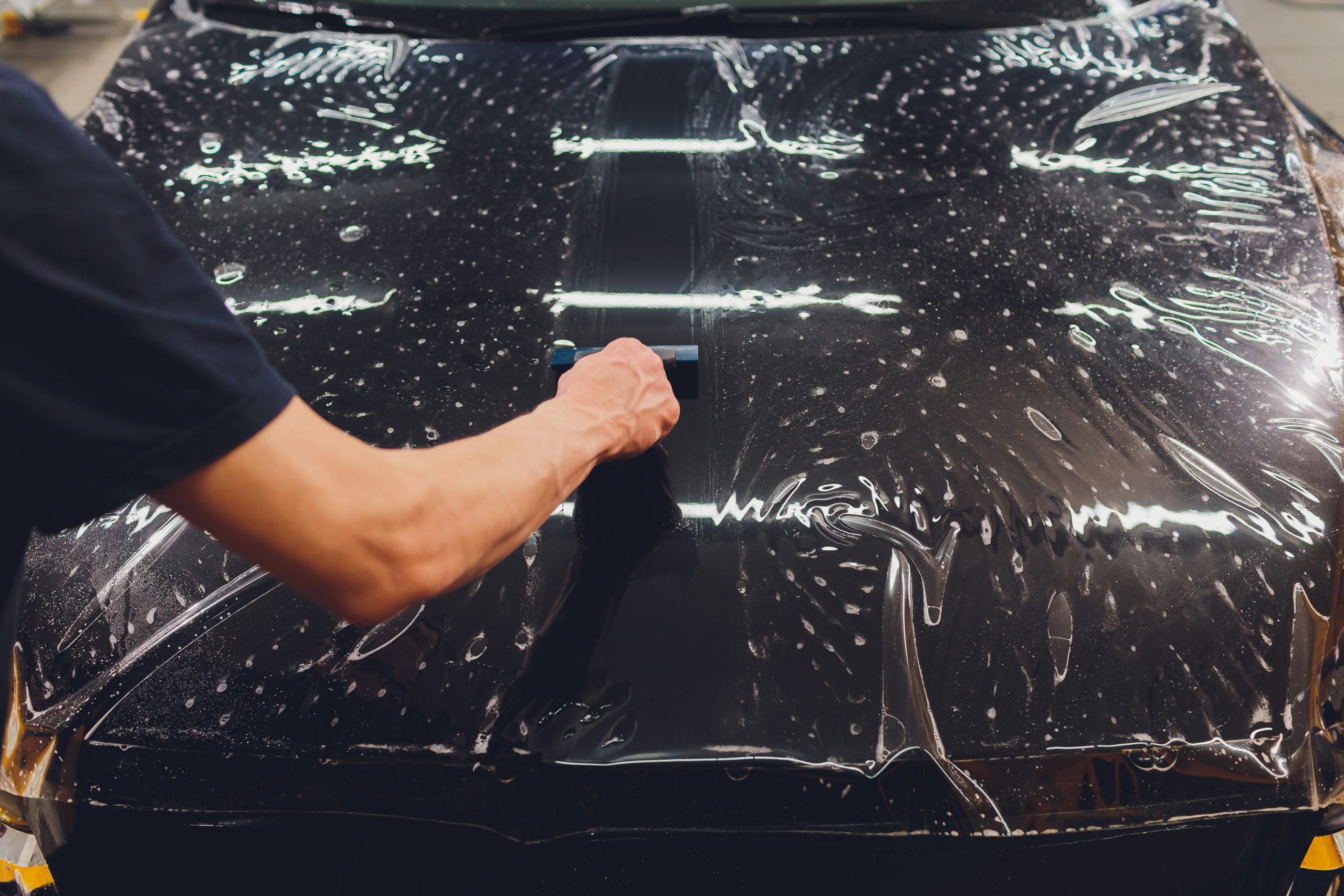
Paint Protection Film is a thick, transparent, and remarkably durable urethane film that is professionally applied to the painted surfaces of a vehicle. Think of it as a heavy-duty, invisible screen protector for your car’s body panels.
Its primary purpose is to absorb and disperse the energy from physical impacts, such as rock chips, gravel, shopping cart dings, and deep scratches, preserving the pristine factory paint underneath.
Modern, high-quality PPF is virtually invisible when installed correctly and has a top layer that is both hydrophobic and “self-healing.”
The Magic of “Self-Healing”
This is one of the most incredible features of modern PPF. The top layer of the film is made from a special elastomeric polymer. When this layer gets a light scratch or swirl mark, the polymer has the ability to “reflow” and return to its original flat state when heat is applied.
This means minor scratches from a bad wash or a stray tree branch will literally disappear on a hot, sunny day or with the gentle application of a heat gun from a professional. This keeps the film looking clear and new for years.
The Pros and Cons of Paint Protection Film
- Unmatched Impact Protection: The absolute best defense against rock chips, period.
- Self-Healing Properties: Minor swirls and scratches vanish with heat.
- Excellent Durability: Premium films are warrantied for 10 years or more.
- UV & Stain Resistance: Protects the underlying paint from fading and chemical etching.
- Very High Cost: It is the most expensive paint protection option by a large margin.
- Installation is Critical: A poor installation can lead to peeling, bubbles, and visible seams.
- Not as Hydrophobic as a Coating: While it repels water, it doesn’t have the insane beading of a top-tier ceramic coating.
- Potential for Discoloration: Lower-quality or older films can yellow over time, though this is rare with modern premium brands.
Common PPF Coverage Options & Pricing
Because of its high cost, most owners don’t wrap their entire vehicle. Instead, they protect the most vulnerable, high-impact areas. A professional installer will typically offer several packages.
The “Best of Both Worlds”: PPF + Ceramic Coating
You don’t have to choose. The ultimate solution, preferred by the most discerning owners, is to combine both technologies. The process involves:
- Installing PPF on the high-impact areas of the car.
- Applying a professional ceramic coating over the entire vehicle, including on top of the PPF.
This gives you the rock chip armor of PPF with the extreme gloss, chemical resistance, and ease of cleaning of a ceramic coating. It is the pinnacle of paint protection.
Is PPF Right For Your Vehicle?
If your primary concern is preventing the physical damage of rock chips and scratches, PPF is the only real solution. The best way to understand your options is to speak with a professional who specializes in both PPF and ceramic coatings.
Find a Paint Protection SpecialistSimilar Posts
How Much Does a Ceramic Coating Cost (2025)?
You’ve seen it all. The $50 spray bottle at the auto parts store promising a “ceramic…
Pro vs. DIY Ceramic Coating: An Honest Guide to Which is Right for You
You’ve done the research. You know a ceramic coating offers incredible gloss and protection. Then you…
Is a Ceramic Coating Worth It? An Honest Cost-Benefit Analysis (2025)
After learning that a professional ceramic coating can cost anywhere from $1,500 to over $3,000, it’s…
Ceramic Coating vs. Wax: The Definitive 2025 Guide
For decades, the Saturday morning ritual was the same: a bucket, a sponge, and a can…
Ceramic Coating vs. PPF vs. Wax
Choosing how to protect your car’s paint can feel like navigating a minefield of marketing terms….