Ceramic Coating vs. Wax: The Definitive 2025 Guide
For decades, the Saturday morning ritual was the same: a bucket, a sponge, and a can of carnauba wax. But in the last ten years, a new technology has completely changed the game: the ceramic coating. This has sparked the single biggest debate in car care today: Ceramic Coating vs. Wax.
Is a traditional wax still a viable choice in the modern age? Or has the semi-permanent, candy-like gloss of a ceramic coating made it obsolete? This guide will cut through the marketing and provide a definitive comparison based on durability, protection, cost, and real-world performance.
The Difference: A Sacrificial Layer vs. A Chemical Bond
The fundamental difference between wax and a ceramic coating lies in how they protect your paint.
A traditional car wax, whether it’s natural carnauba or a synthetic polymer sealant, is a sacrificial layer. It sits on top of your car’s clear coat. It’s an oily, slick layer that repels water and provides a beautiful “warm” glow. However, it has a low melting point and weak chemical resistance. Over a few weeks or months, it’s broken down by heat, rain, and detergents, and simply washes away.
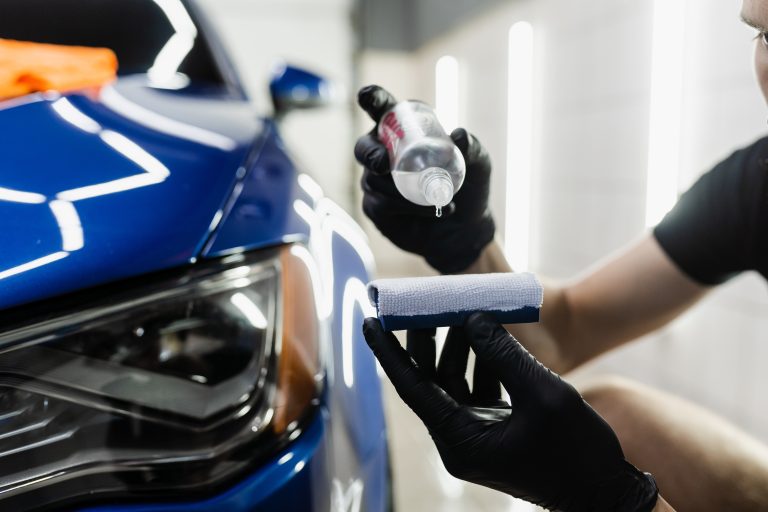
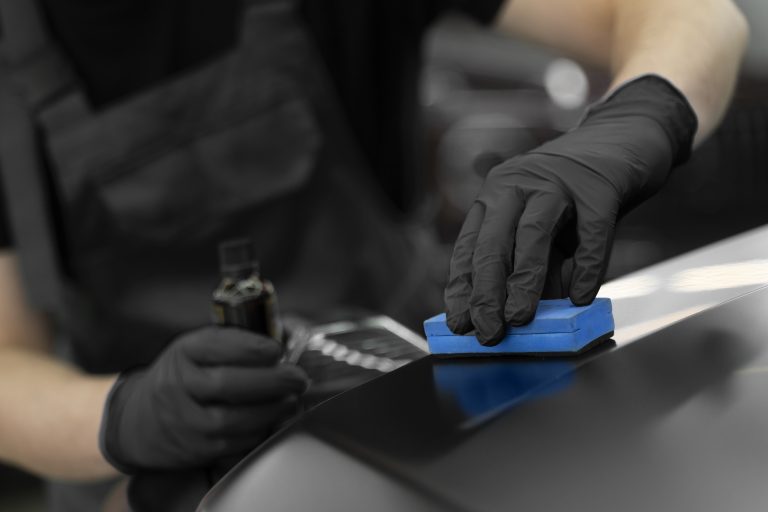
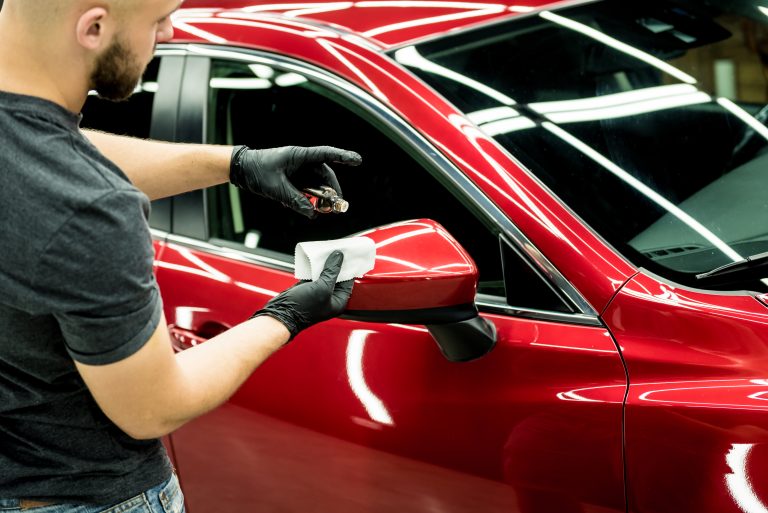
A true ceramic coating is a liquid polymer made from Silicon Dioxide (SiO2). When applied, it creates a chemical bond with your car’s clear coat. It doesn’t just sit on top; it cross-links to become a new, integrated part of the surface. This process, called curing, creates a hard, glass-like shell that is far more durable and chemically resistant than any wax.
Buyer Beware: “Ceramic Wax” vs. True Coatings. Many products are now marketed as “ceramic sprays” or “hybrid ceramic wax.” While these are excellent, durable sealants that are much better than old-school waxes, they are not true ceramic coatings. They offer a few months of protection, not years, and do not have the same hardness or chemical resistance as a professional-grade coating.
Visualizing the Difference: Torture Testing
Seeing is believing. The team at Chicago Auto Pros, a highly respected professional detailing shop, performed a long-term test that perfectly demonstrates the real-world difference in durability.
Analysis of Chicago Auto Pros’ “Ceramic Coating VS Wax” Test
In their test, they applied a ceramic coating to one half of a hood and a traditional sealant/wax to the other. They then documented the results over months of exposure to harsh Chicago weather and car washes.
-
Hydrophobics: Initially, both sides beaded water well. After just a few washes, the waxed side began to fail, with water sheeting instead of beading. The coated side maintained perfect, tight beads.
-
Chemical Resistance: They sprayed the panel with a harsh all-purpose cleaner. The wax was visibly stripped away, while the ceramic coating was completely unaffected.
-
Longevity: The wax/sealant was effectively gone in under 2 months. The ceramic coating was still performing like new at the end of the test period.
There’s really no competition… a ceramic coating is going to outperform a wax or a sealant in every single category of protection and durability.
Who Should Choose a Ceramic Coating vs. Wax?
The choice depends entirely on your goals, budget, and how you use your car. Here’s a breakdown:
- You want the best possible long-term protection (2-5+ years).
- You value ease of maintenance and a car that stays cleaner, longer.
- You want superior resistance to UV rays, bird droppings, and chemicals.
- You see protection as a long-term investment for your vehicle.
- You are on a tight budget.
- You genuinely enjoy the process of waxing your car every few months.
- You have a classic car and want an authentic, period-correct carnauba glow.
- You are not prepared for the intensive paint correction required before coating.
Our Top Product Recommendations
CarPro CQuartz UK 3.0
Why It’s Our Top Pick:
CarPro CQuartz is one of the most respected names in the coating industry. The UK 3.0 edition is specifically formulated to be easier to apply in a wider range of temperatures and humidity levels, making it perfect for the serious DIY enthusiast. It provides an incredibly rich gloss, extreme water beading, and 2+ years of real-world protection when properly maintained. The kit includes everything you need for application.
Collinite No. 845 Insulator Wax
Why It’s Our Top Pick:
If you’re going to use a wax, use the king. Collinite 845 is a legend in the detailing world for a reason. Originally developed for electrical insulators, it’s a heavy-duty liquid wax that offers the best durability you can get from a non-coating product. It’s easy to apply and provides months (not weeks) of protection and beading. It’s the perfect choice for someone who wants better-than-average protection without committing to a full coating.
The Final Verdict: An Evolution in Protection
While traditional wax will always have a place in the hearts of enthusiasts, ceramic coatings represent a clear technological evolution. For the average car owner looking for the best protection, durability, and ease of maintenance, a ceramic coating is the superior choice in every measurable way.
Think of it like this: wax is like a high-quality raincoat that you have to put on every time you go out. A ceramic coating is like a permanent, waterproof, and self-cleaning skin. Both keep you dry, but one is fundamentally more advanced and convenient.
Ready for Ultimate Protection?
Applying a true ceramic coating requires a near-perfect, decontaminated surface. For the best results, a professional paint correction and application is the recommended path. Find a vetted, trusted detailer near you.
Find a Professional Detailer